
Your keyword research should not be a simple list of keywords. You in fact need a topical map.
Topical map is just like a map of the world.
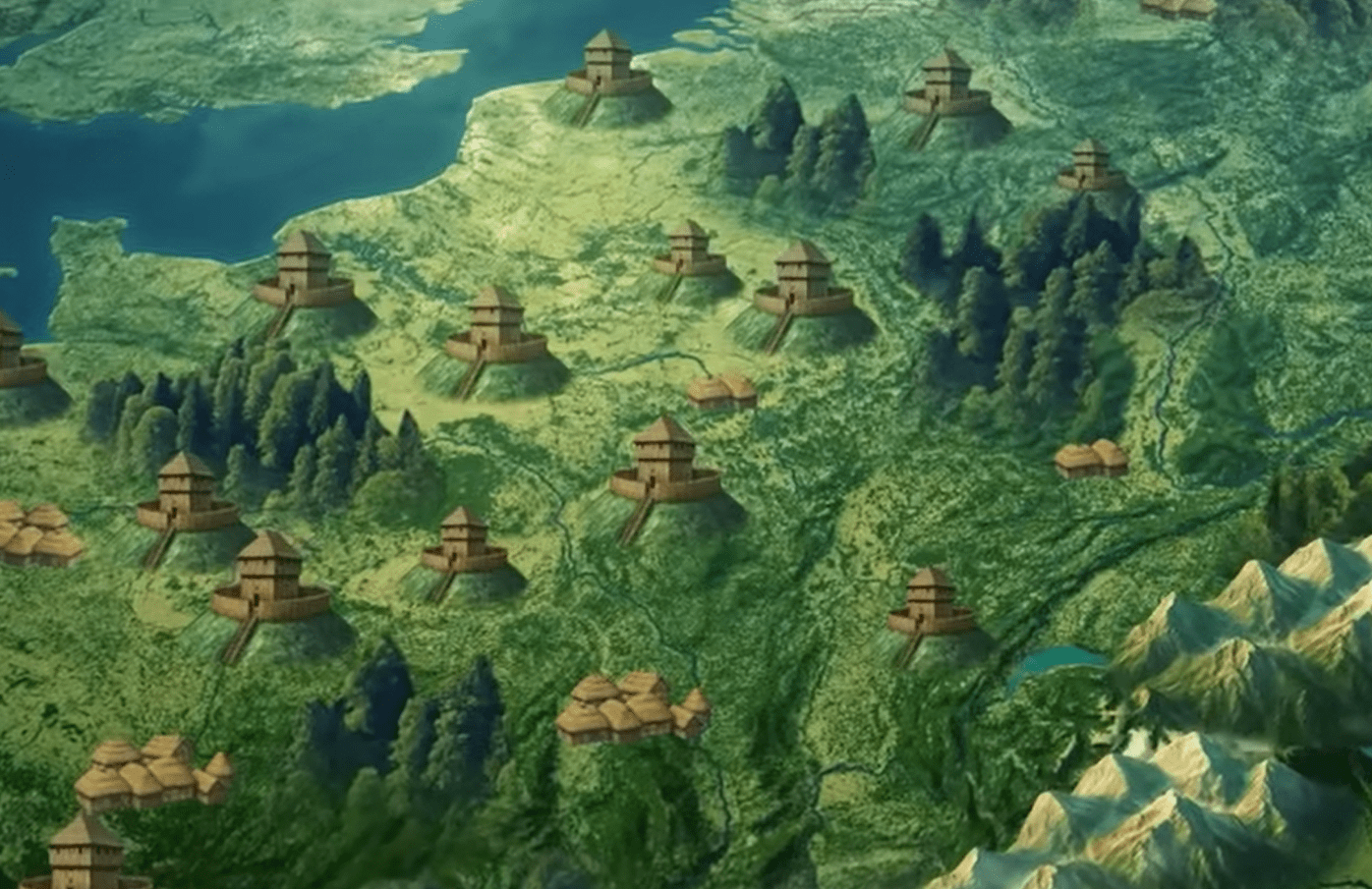
A list tells you what people search for. A topical map shows you how things relate together, what belongs together, and where you have gaps in content. And once you start thinking like this, you stop writing articles just “one after another”.
You start building a system.
And exactly this is what modern SEO is about. It is no longer only about keywords, but about topics, entities, and their relationships.
What is a topical map in SEO
A topical map in SEO is a way how to organize a topic so that it makes sense.
A topical map in SEO does not work like a list of keywords, but like a connected network of topics and concepts. It helps you understand what all belongs to one topic and how the individual parts relate together.
Imagine for example the topic “content marketing”. It is not only one article. Strategy belongs there, SEO, content creation, distribution, tools, measuring results.
And now imagine that you connect these things:
strategy influences content, content needs distribution, SEO helps content get to people.
Suddenly you don’t have only articles. You have a map.
And exactly in this way search engines like Google look at your website.
From keywords to entities: how SEO has changed
From keywords to entities is one of the biggest shifts that SEO has experienced in recent years.
In the past SEO was simple. You chose a keyword, wrote an article, and tried to get to the first place in Google.
Then came so-called topic clusters. Groups of articles around one main topic. That was already better, but still quite shallow.
Today SEO is further.
Google no longer works only with words. It works with entities. These are real things or concepts. For example “content marketing”, “SEO tool” or “Google Analytics”.
These entities relate together. And Google tries to understand exactly these relationships.
A topical map helps you think in the same way.
How Google understands topics and relationships
How Google understands topics and relationships is key for understanding modern SEO.
Google does not read text like a human. It tries to understand what your content really is about and how it fits into a wider context.
It uses for this for example the Knowledge Graph. That is a large database where it has stored different entities and their relationships.
It observes for example:
which concepts appear together in the text
which things relate together
what belongs to a given topic
So it does not ask only:
“Is this keyword here?”
It rather asks:
“Does this content belong to this topic and does it make sense there?”
If your content has good structure and logic, Google understands it better and trusts it more.
How to build a topical map without complications
How to build a topical map without complications is simpler than it may seem at first sight.
A topical map you can build even without tools, only by thinking about the topic.
Choose one main topic. Not only a keyword, but something that exists as a concept. For example “cybersecurity”.
Then try to write down what belongs to it. Threats, protection, tools, rules, human behavior.
Step by step you go deeper. What threats? What tools? Who creates the rules?
And in one moment you notice that it is no longer only a list. Things start to connect. Some things relate together, some depend on each other, some solve a specific problem.
And that is a topical map.
When you draw it, even very simply, you will see what is missing. And exactly these missing parts are the best ideas for new content.
How a topical map helps you with content creation
How a topical map helps with content creation is one of its biggest benefits.
A topical map gives you a clear overview of what you already have covered and what you are still missing. You no longer need to guess what to write next.
You just look at the map and immediately see where you have gaps. Maybe you write about tools, but not about how they are used. Maybe you explain concepts, but examples are missing. Maybe you solve problems, but not solutions.
The map shows it to you.
It also helps you with internal linking. Each article you can connect with another according to how they relate together. Not randomly, but logically.
Your website then does not look like a collection of articles, but like a connected system.
Topical authority is not created by volume, but by connection
Topical authority is not created by the amount of content, but by how well the content is connected.
Many people think that it is enough to write more and more articles. But that is not enough.
If articles do not relate together, overlap or important parts are missing between them, Google sees chaos.
On the other hand, even a smaller website can look strong if it has good structure. If topics are connected and make sense.
It is not only about how much you write. It is about how well it holds together.
Topical maps and AI: where SEO is going
Topical maps and AI today closely relate together and show where SEO is going.
Large language models work similarly like topical maps. They learn which things belong together and how they relate.
That means your competition is no longer only another article. But also a system that already has the whole map of the topic.
The good news is that you do not need to fight this.
If you have a well-built topical map, your content is for AI and Google much more understandable. It can better understand it, classify it and use it.
Conclusion
A topical map is not only an SEO trick.
A topical map is a way how to think about content and how to build a long-term strong website.
You stop writing articles only according to keywords and you start building a connected content system. One that makes sense.
And when your content has a clear structure, results come on their own.
Because in the end, it is still about the same question:
Does this content understand the topic?
If you have a good topical map, the answer is yes.
Leave a Reply