
Let’s assume you want to become confident in a topic like Wizards vs Aliens.
You may or may not know the series.
You may have only a basic idea that it’s a British science fantasy show.
If you want to build topical authority, that starting point is enough.
What matters is how you expand that knowledge in a structured way.
Most people would approach this by writing a general article:
- plot summary
- main characters
- a few production details
That creates content, but not coverage.
Topical authority requires something more systematic.
You need to understand what belongs to the topic and how the parts connect.
This is where Topicstotalkabout becomes useful.
Understanding the Topic Through the Topical Map
When you open the Wizards vs Aliens map, you are are looking at a structured overview of the topic.
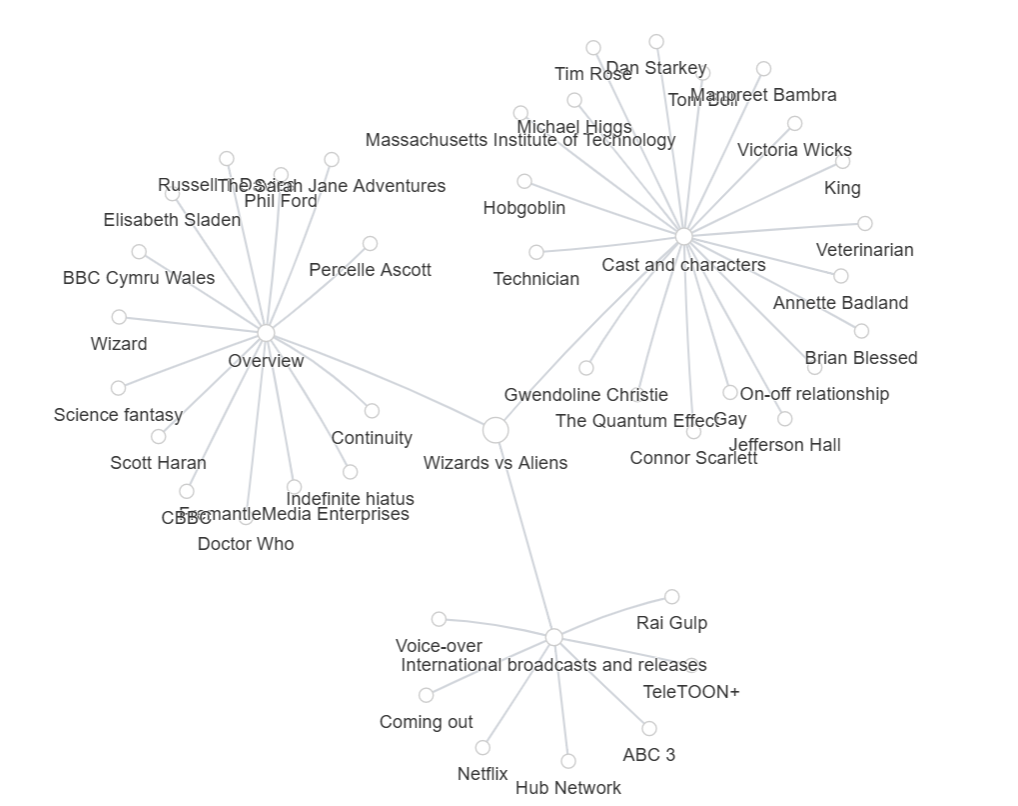
You can immediately see several important areas:
- Overview (the core concept of the series)
- Cast and characters (the largest and most connected cluster)
- International broadcasts and releases
- Related productions (Doctor Who, The Sarah Jane Adventures)
- People (actors, creators)
- Organizations (BBC, CBBC, FremantleMedia)
This gives you a much clearer picture than a typical article.
Instead of a single narrative, you now see multiple dimensions:
- story
- people
- production
- distribution
- context
Step 1: Break the Topic into Clear Content Areas
Start by grouping what you see into logical sections.
For this topic, a practical structure looks like this:
- Series overview and premise
- Cast and characters
- Creators and production
- Genre and concept (science fantasy)
- Broadcast and international distribution
Each of these areas can grow into a group of articles.
At this stage, you are building a structure you will follow.
Step 2: Build a Core Page
Your main page should explain the series clearly, but in your own way.
Instead of copying a standard description, focus on:
- what the series is about
- the core conflict (wizards vs aliens, magic vs technology)
- who created it
- how it relates to other shows like Doctor Who
This page acts as the center of your content. Everything else will link back to it.
Step 3: Expand the Largest Cluster First (Cast and Characters)
The map shows that Cast and characters is the most connected area.
This is a strong signal.
It means that characters and actors are central to understanding the topic.
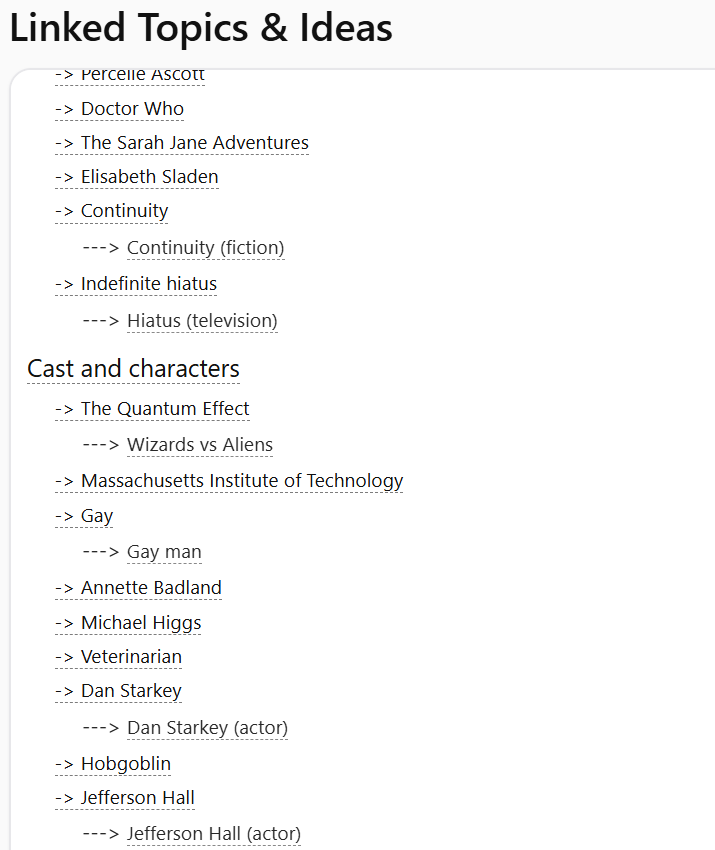
You can build multiple articles here:
- main characters in Wizards vs Aliens
- detailed profiles of key characters
- actors and their roles
- relationships between characters
For example:
- Tom Clarke as the young wizard
- Benny as his friend
- Nekross as the alien threat
You can also explore:
- how characters develop
- how relationships change
- how different roles connect to the main story
This alone can form a large part of your topical coverage.
Step 4: Cover Creators and Production Context
From the map, you can see important names:
- Russell T Davies
- Phil Ford
- BBC Cymru Wales
- FremantleMedia Enterprises
These are not side details.
They explain why the show exists and how it was made.
You can create content such as:
- who created Wizards vs Aliens and why
- connections to Doctor Who and The Sarah Jane Adventures
- production style and target audience (CBBC)
This helps place the series in a broader television context.
Step 5: Explain the Genre and Core Concept
The map includes science fantasy as a key concept.
This gives you another angle.
Instead of only describing the show, you can explain:
- what science fantasy means
- how Wizards vs Aliens combines magic and science fiction
- why the conflict between wizards and aliens works
You can also explore:
- the idea of magic vs technology
- how the series builds its universe
This type of content adds depth beyond basic summaries.
Step 6: Cover Distribution and International Reach
Another clear cluster is International broadcasts and releases.
This includes:
- Netflix
- ABC
- TeleTOON+
- Rai Gulp
- Discovery Family
You can build articles such as:
- where Wizards vs Aliens was broadcast
- how the show reached international audiences
- availability on streaming platforms
This part is often ignored, but it helps complete the topic.
Step 7: Use Relationships to Guide Specific Articles
The topical map shows relationships like:
- Wizards vs Aliens → starring
- Wizards vs Aliens → premise
- Wizards vs Aliens → international broadcasts
Each relationship suggests a type of content.
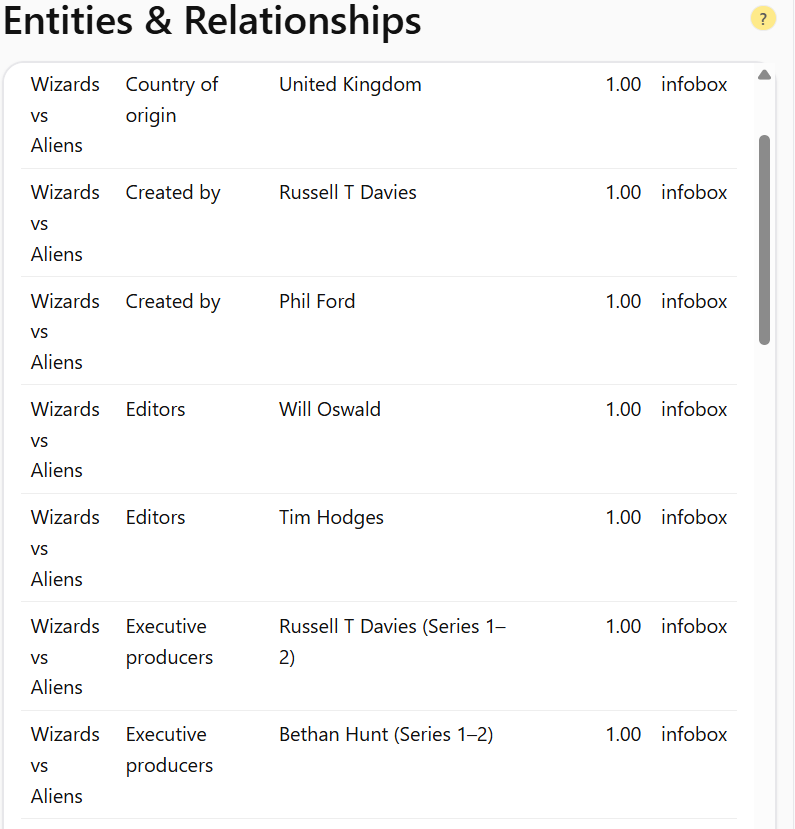
Instead of writing broad articles, you can focus on one connection at a time:
- detailed breakdown of the main premise
- analysis of the main cast
- explanation of how the show was distributed globally
This keeps your content focused and avoids repetition.
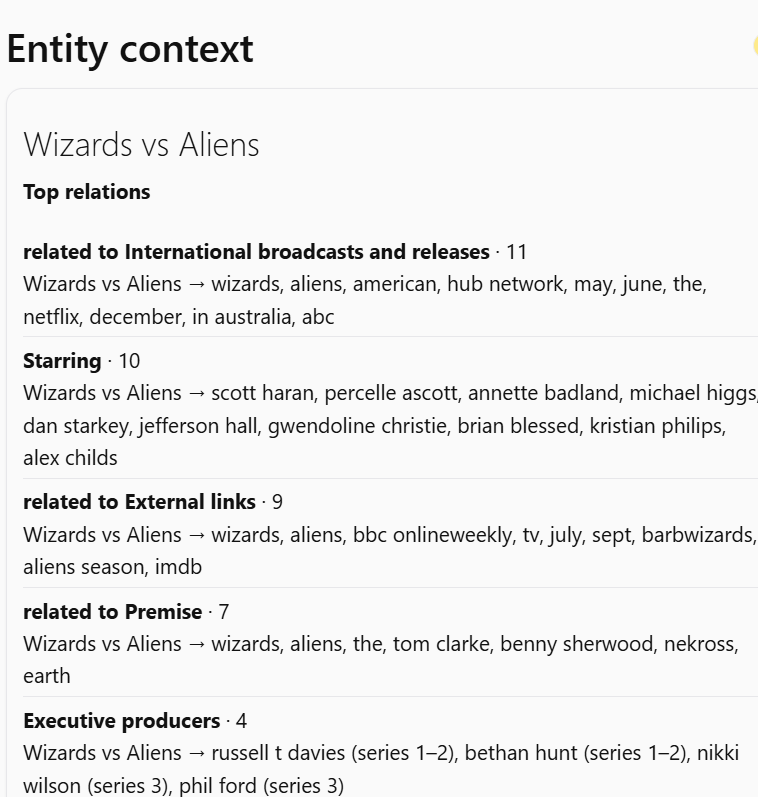
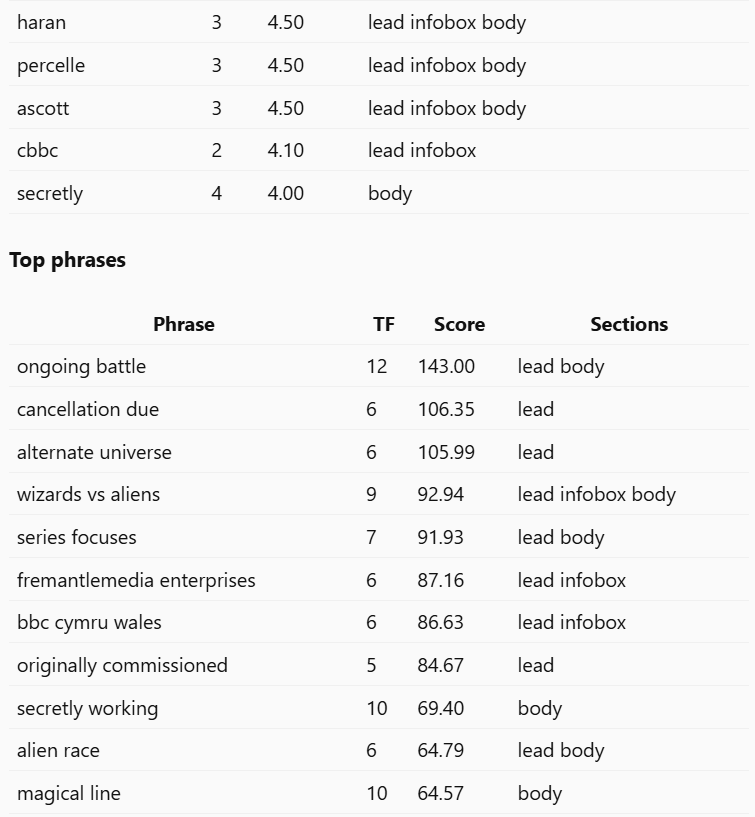
Step 8: Use Word and Phrase Patterns Naturally
The word data shows recurring terms such as:
- series
- episodes
- magic
- alien race
- battle
- earth
These are part of how the topic is usually described.
When you write about:
- the conflict between wizards and aliens
- the alien race Nekross
- the ongoing battle on Earth
you will naturally include these terms.
This helps your content align with real-world language.
Step 9: Structure Internal Links Around the Topic
As you create content, connect it logically.
For example:
- the main page links to characters, production, and distribution
- character pages link to each other
- production pages link to related shows
This creates a network of pages that reflects the structure of the topic.
It also helps readers explore the subject step by step.
Step 10: Continue Expanding Based on the Map
Once you have covered the main areas, return to the map.
Look for:
- entities you have not covered yet
- relationships you have not explored
- smaller topics that can become standalone articles
For example:
- individual actors
- specific episodes or story arcs
- supporting concepts like voice-over or translation
This gives you a clear direction for further content.
A Practical Way to Start
You can begin with a simple plan:
- one main overview page
- one page about characters
- one page about creators
- one page about genre
- one page about distribution
Then gradually expand:
- add character profiles
- add deeper explanations
- connect everything through links
Summing It Up
Building topical authority around a topic like Wizards vs Aliens is about creating a structured set of pages that reflect the full scope of the topic.
A topical map helps you see that scope clearly.
Once you understand how the parts fit together, you can move forward step by step, expanding your coverage until the topic feels complete.
This approach works not only for television series, but for any subject where you want to build clear, connected knowledge.
Leave a Reply